Category: Uncategorized

  • Understanding your Anxiety

    Understanding your Anxiety

    I am a Psychotherapist in Ireland and someone who was once totally consumed by anxiety so I really understand it from both a lived and learned perspective.

    Feeling anxious is a common experience for many of us but there is a difference between feeling anxious and anxiety. Feeling anxious is very normal and easily managed but anxiety is something that can be overwhelming and consuming.

    Have you ever felt so anxious that you just can’t think straight? And then you start to worry that there’s something wrong with you which only adds to your overwhelm and feeling of not being able to think straight. Your anxiety increases and you start to panic that maybe you’re not sane.

    Well there’s a reason for that and it’s not because there’s something wrong with you. It’s because you can’t actually think straight. Your emotional brain (amygdala) has taken over and your rational thinking brain (prefrontal cortex) can’t function. You need to be balanced between them but in those moments you’re in emotional hijack.

    There is a way to fix this and for you to engage your thinking brain and I want to help you.

    Through my anxiety toolkit, I will work with you to find ways tailored specifically to you to help reduce those feelings, lower your anxiety level and make you feel more in control.

    My workshop consists of a 1 hour 1:1 session with me which is to help you understand your anxiety better. We will explore it and identify how it manifests in your life. We’ll delve into your anxiety triggers. You’ll walk away with valuable insights, practical strategies and a sense of empowerment to manage your anxiety more effectively.

    You’ll also receive a comprehensive workbook and a personalised plan as well as a grounding meditation. You will have a further understanding of your rain and how the various parts of it work when you’re in an anxious state.

    If you’d like to work with me, you can book your anxiety toolkit session here

    To keep up to date with all of my news and updates, be sure to follow me on Instagram.

    Understanding your Anxiety | Your Support 2026
  • Why AI isn’t Therapy by a Psychotherapist in Ireland

    Why AI isn’t Therapy by a Psychotherapist in Ireland

    Whether you’re a fan of it or not, AI is becoming more embedded in our lives. For the record, I don’t use AI in my business (nor any other aspect of my life). As a person-centred psychotherapist in Ireland, people are at the heart of everything I do.

    There is a growing trend of people seeking AI for their therapeutic needs and I understand the reasons why but AI can never replicate therapy.

    Here are some of the reasons why:

    3 core principles

    There are 3 core principles that many of us therapists follow as put forward by Carl Rogers: empathy, unconditional positive regard and congruence. This essentially means that as your therapist, I do not judge you, I see your authentic self and I view you in the best light and I am sincere and genuine with you. This is something a machine or program cannot do.

    Jung’s transformative view

    Carl Jung believed that a transformative process takes place in therapy between both the therapist and client, almost like alchemy. I truly believe in this transformation and I have learned so much and changed from my client interactions. I am inspired by my clients. That connection and bond is not possible with a programmed chatbot.

    Abundance of therapy talk

    We have all seen an increase in “therapy talk” and how it can often be harmful and in some cases weaponised. Words like boundaries, toxic, self-care can be used incorrectly to manipulate and gaslight (to use another often misused term). AI interactions produce an abundance of these words to the user which don’t really deal with any of their issues and can make matters worse.

    Can’t spot the subtle differences

    A machine doesn’t know you, it doesn’t recognise your patterns or triggers or growth. It can’t sense the subtle changes in your tone. It doesn’t notice when you look lighter from your troubles or when your posture is showing your pain. It can’t celebrate your wins and be your cheerleader. I see your bravery, your hurt, your strength, your vulnerability, your tears, your glow and your changes.

    A machine doesn’t care

    I truly care about my clients, every single one of them. I think about them long after we have finished working together. I remember their birthdays or painful anniversaries for them. I care about their disappointment, heartache, achievements and joy. AI does not care; it is not capable of caring.

    I am with you on your journey. I am not a feeling-less robot incapable of emotions. I know how to listen and ask questions to help you, I know how to support you and be with you in your experience.

    If you would like to work with me, you can book a consultation here. 

    To keep up to date with all of my news and updates, be sure to follow me on Instagram.

    Why AI isnt Therapy | Your Support 2026

  • Why I Believe in Online Therapy by a Psychotherapist in Ireland

    Why I Believe in Online Therapy by a Psychotherapist in Ireland

    One of the most transformative experiences in therapy is the strong interpersonal relationship built between the therapist and the client. This connection is the cornerstone of effective therapy, and it transcends physical location and proximity. This is why I am a firm believer in online therapy.

    In a world where our lives are increasingly digital, online therapy offers convenience and accessibility, but more importantly, it proves that meaningful connections can be made, regardless of location. As a Life Coach and Psychotherapist in Ireland, I have seen firsthand how powerful online sessions can be in fostering deep, therapeutic relationships.

    Here’s why online therapy works:

    1. Connection Over Proximity: The essence of therapy lies in the trust and rapport between the therapist and the client. This connection is not bound by physical location. Through my online services, you will experience a safe, empathetic and supportive environment, no matter where you are.
    2. Accessibility and Convenience: Online therapy removes barriers such as travel time, and scheduling conflicts. It opens up the possibility for more people to access the support they need, from the comfort of their own space.  You can sit in your pyjamas and be comfortable and cosy.
    3. Comfort and Privacy: Many clients find that they can open up more easily in their own surroundings. Online therapy provides a level of comfort and privacy that can enhance the therapeutic process.
    4. Consistent Support: Life can be unpredictable, but online therapy ensures that you have consistent support, even when you’re traveling or have other commitments. This continuity is essential for long-term growth and progress.

    If you’ve been considering therapy but are unsure about online sessions, I encourage you to give it a try. The connection we build can be just as profound and impactful as in-person sessions.

    To keep up to date with all of my news and updates, be sure to follow me on Instagram.

    Why I Believe in Online Therapy | Your Support 2026

  • Taking care of yourself during a global crisis from a Psychotherapist in Ireland

    Taking care of yourself during a global crisis from a Psychotherapist in Ireland

    Although I’m a Psychotherapist in Ireland, more and more, I meet with people who are in a crisis due to international events.

    Many of us are grieving how we thought the world operated. We bear witness to the suffering of people we’ve never met, as we watch their lives being taken or torn apart from afar through a rectangular device in our hands.

    We find ourselves in shock, disbelief and fear due to concerning election results worldwide. We grow weary of fake stories and misinformation that shape society.

    We fear for our home, worried about impending climate disasters. The distress is tangible and we often feel helpless.

    Coupled with this helplessness is a guilt that we’re not doing enough and an anger at our leaders for not doing enough either.

    All of these emotions are valid. I feel it too. But as legitimate as these concerns are, they can become overwhelming.

    Perhaps you find yourself crying more often or suffering from anxiety. Maybe you’re starting to feel depressed, unable to find joy in things you once loved. The guilt and grief might be making you withdrawn and unable to engage in your normal way of life. It’s a lot to carry and it’s understandable to feel burdened by these emotions.

    So, what can we do about it? I wish I had a definitive answer that could resolve everything but, unfortunately, I don’t. I can, however, offer you some tips to help you manage your well-being during these tumultuous times:

    1. Limit Media Consumption: While staying informed is important, incessant exposure to news can lead to feeling overwhelmed. It’s perfectly okay to take breaks when you need them.
    2. Monitor Social Media Use: It’s easy to fall into the trap of doom-scrolling, but this habit only exacerbates feelings of helplessness. Set boundaries for yourself and stick to them.
    3. Stay Connected: Share your feelings with trusted friends or family members. Engaging with like-minded activists, advocates, or community groups can be a great source of support.
    4. Focus on What You Can Control: While you can’t control the world, you can control your actions and responses. Concentrate on the small, positive changes you can make in your life and to society.
    5. Engage in Self-Care: Allocate time for activities that bring you joy and relaxation. Whether it’s through hobbies, exercise, or simply taking a moment to breathe, self-care is vital.
    6. Seek Professional Help: If you find your feelings are too overwhelming to handle alone, talking to a professional can make a significant difference.

    Your feelings are valid. Life is undoubtedly tough right now. Remember, you are not alone, and it’s okay to seek out support.

    Take of yourself because you matter.

    If you’d like to explore your feelings further, book a session here.  This is to make sure that I’m the right fit for you.

    To keep up to date with all of my news and updates, be sure to follow me on Instagram.

    Taking Care of Yourself During a Global Crisis | Your Support 2026

  • Navigating Boundaries at Christmas

    Navigating Boundaries at Christmas

    The festive season can be a time of joy, celebration and connection. Yet, for many, it can also be a period of stress, overwhelm and emotional strain. As a Psychotherapist, I’ve observed that one of the key challenges people face during this time is managing boundaries.  Whether it’s with family, friends, or even oneself, setting and maintaining healthy boundaries is crucial to enjoying a fulfilling and balanced Christmas.

    Understanding Boundaries

    Boundaries are the invisible lines that determine how we interact with others and how we allow others to interact with us. They help us maintain our sense of self, protect our emotional well-being and ensure our needs are met. During the holiday season, boundaries can become blurred as we navigate social obligations, family dynamics and the pressure to please others.

    Why Boundaries Matter at Christmas

    • Preventing Overwhelm: The festive period can bring an overload of activities, from parties and family gatherings to gift shopping and meal preparations. We can become overwhelmed easily from social pressures and engagement as well as financial stresses. Establishing boundaries helps prevent burnout and ensures you have time for rest and self-care. 
    • Maintaining Emotional Balance: Family gatherings can sometimes trigger old wounds and unresolved conflicts.  Family remarks or interactions can cause extreme hurt and we’re left with that long after the meal has been finished. Setting clear boundaries can help you manage these interactions and protect your emotional health.
    • Respecting Personal Needs: Everyone has different needs and comfort levels. Most of us don’t want our painful experiences or are our lifestyle choices questioned over the dinner table.  By setting boundaries, you honour your own needs and create an environment where everyone can feel respected and valued.

    Practical Tips for Setting Boundaries

    1. Communicate Clearly: Express your needs and limits with kindness and clarity. For example, if you need some quiet time, let your family know that you’ll be taking a walk or retreating to a quiet room for a bit.

    2. Prioritise Self-Care: Navigating the season can be emotionally taxing, especially when dealing with differing opinions. Make self-care, however that looks and feels for you, a non-negotiable part of your routine.  Take breaks if you need them.  Walk away and listen to your favourite song or do a short breathing exercise before returning to the situation. Whether it’s taking time for a calming mindfulness session, a walk in nature, or simply enjoying a moment of solitude with a good book, taking care of your emotional well-being is crucial. 

    3. Say No When Necessary: It’s okay to decline invitations or requests that feel overwhelming. Saying no can be challenging, but it’s essential for maintaining your well-being. Remember, every “no” is a “yes” to something that matters more to you.

    4. Plan Ahead: Anticipate potential stressors and plan how you’ll handle them. For instance, if family gatherings tend to become heated, set a time limit for your visit and have an exit strategy in place.

    5. Prepare Responses:During gatherings, you may receive questions or comments that feel uneasy to you. Politely but firmly set boundaries if the conversation becomes uncomfortable. A simple response like, “I appreciate your curiosity, but let’s focus on enjoying this time together,” can help redirect the conversation.  Or you can simply say “ I’d rather not talk about it”. 

    6. Seek Support: If you’re struggling to set boundaries, consider seeking support from a trusted friend, family member, or a professional therapist. Sometimes, talking things through can provide clarity and reinforce your resolve.

    It can be difficult to set and keep to boundaries and they often need practice but you are not being selfish; it’s about honouring yourself and creating a holiday experience that is joyful and fulfilling. By communicating your needs, prioritising self-care and respecting your limits, you can navigate the festive period with grace and ease. This Christmas, give yourself the gift of healthy boundaries and embrace the true spirit of the season – one of love, connection and well-being.

    If you’d like to explore your boundaries further, you can book here.  This is to make sure that I’m the right fit for you.

    To keep up to date with all of my news and updates, be sure to follow me on Instagram.

    Navigating Boundaries at Christmas | Your Support 2026

  • Pet Loss from a Psychotherapist in Dublin

    Pet Loss from a Psychotherapist in Dublin

    At the beginning of the year, I lost my cat Binx. He was my great love and I miss him more than I can ever express.

    Recently, I lost more of my gorgeous animals and it has been heartbreaking. Life on an animal sanctuary can be great but it can also bring tremendous loss.

    Losing an animal is deeply painful and can be as traumatic as losing a human. Unfortunately, society doesn’t always allow us the space to grieve or process our loss. Many of us hide our pain and heartache, making it much harder to deal with. Many of us feel lonely in our loss.


    In fact, dealing with pet grief was the main reason I became a psychotherapist. When my beloved dog died after 15 years together, I was broken. I remember calling in sick to my job at the time and explained what happened. I got one day off and when I returned the next day I was asked if I was over it yet and was then laughed at. I was made to feel ashamed for my pain and was ridiculed. I wanted to help others through their grief so they woudn’t feel as alone as I did.

    It is an incredibly difficult time and I want to support you. I have a FREE resource on my website which I hope brings you some comfort. There is no obligation to work with me from accessing the resource; it is simply there to offer you support and let you know that you are not alone.

    I am so sorry if you are experiencing the pain and grief of pet loss and I want you to know that your grief is valid. You had a connection and an unbreakable love with your animal.

    You can access my free resource here.

    If you’d like to explore this further, you can book here. 

    To keep up to date with all of my news and updates, be sure to follow me on Instagram.

    Pet Loss | Your Support 2026

  • Feel afraid but still succeed! Advice from a Psychotherapist in Dublin

    Feel afraid but still succeed! Advice from a Psychotherapist in Dublin

    Fear is a universal experience—whether we’re starting a new project, stepping into a leadership role, or pursuing personal growth, fear often accompanies us on these journeys. But here’s the powerful truth: feeling afraid doesn’t mean you can’t succeed.

    As a Coach and Psychotherapist in Dublin, I’ve often seen clients grapple with fear. Truthfully, I’ve battled it with myself and on a regular basis too. Through this experience, I’ve learned that success isn’t about never feeling afraid; it’s about pushing forward and taking action despite that fear. Here are some insights to help turn fear into a stepping stone to success:

    1. Acknowledge your fear: Denying or suppressing fear only makes it stronger. Recognise and accept your fear as a natural response to stepping out of your comfort zone.

    2. Break it down: Big goals can feel overwhelming. Break them into smaller, manageable steps. Each small win builds confidence and makes the larger goal feel more attainable.

    3. Reframe your mindset: Fear often amplifies negative outcomes. Reframe your thinking by focusing on potential positive scenarios and the growth opportunities each challenge presents.

    4. Build a support network: Surround yourself with positive influences and mentors who can provide guidance and encouragement. A strong support system can make all the difference in overcoming fear.

    5. Embrace failure as learning: Understand that failure is not the opposite of success; it’s part of the journey. Each setback offers valuable lessons that bring you closer to your goals. Embrace these opportunities to grow.

    6. Take action: The best way to overcome fear is to take action. Even small steps create momentum. Confidence grows with action and each step forward diminishes the power of your fears.

    7. Celebrate your courage: Acknowledge and celebrate the courage it takes to face your fears. Every time you push through fear, you build resilience and strength.

    Remember, it’s natural to feel afraid. But with each courageous step you take, you reaffirm your potential and pave the way for success.

    If you’d like to explore this further, you can book here. 

    To keep up to date with all of my news and updates, be sure to follow me on Instagram.

    Feel Afraid But Still Suceed | Your Support 2026

  • The Benefits of Therapy from a Psychotherapist in Dublin

    The Benefits of Therapy from a Psychotherapist in Dublin

    In today’s fast-paced world, it’s easy to feel overwhelmed, stressed and out of balance. Whether you’re dealing with personal challenges, relationship issues, or simply seeking personal growth, therapy can be a transformative tool. If you’re searching for ways to enhance your mental and emotional well-being, working with a psychotherapist can provide the support and guidance you need.

    Why Consider Therapy?

    Therapy, also known as psychotherapy or counselling, is a collaborative process between a trained therapist and an individual seeking help. Here are some key benefits of therapy:

    Improved Mental Health

    One of the primary benefits of therapy is the improvement of mental health. As a Psychotherapist in Dublin, I can help you navigate anxiety, stress and other mental health challenges. Through various therapeutic techniques, you can learn how to manage symptoms, develop healthier thought patterns and improve your overall mental well-being.

    Enhanced Self-Awareness

    Therapy is a journey of self-discovery. It provides a safe space to explore your thoughts, feelings and behaviours without judgment. By working with me, you can gain insights into your motivations, values and underlying issues that may be affecting your life. Increased self-awareness can lead to personal growth and more fulfilling relationships.

    Better Coping Mechanisms

    Life is full of challenges and having effective coping mechanisms is essential for resilience. I can teach you practical strategies to cope with stress, trauma and difficult situations. Whether it’s mindfulness techniques, cognitive-behavioural strategies, or relaxation exercises, therapy equips you with tools to navigate life’s ups and downs more effectively.

    Strengthened Relationships

    Healthy relationships are crucial for a fulfilling life. Therapy can improve communication, understanding and conflict resolution skills. If you’re facing relationship issues, I can help you work through them. Whether it’s couples therapy, family therapy, or individual therapy, you can build stronger, more meaningful connections with those around you.

    Increased Confidence and Self-Esteem

    Low self-esteem and lack of confidence can hold you back from reaching your full potential. Therapy can help identify the root causes of these feelings and work on building a positive self-image. I can guide you through exercises and techniques to boost your confidence and develop a healthier sense of self-worth.

    Goal Setting and Personal Growth

    Therapy isn’t just about addressing problems; it’s also about setting goals and aspiring to be your best self. I can help you identify your aspirations, set achievable goals and create a plan to reach them. Whether you want to improve your career, enhance your relationships, or achieve personal milestones, therapy can provide the structure and support you need.

    Finding the Right Psychotherapist

    Choosing the right therapist is a crucial step in your therapeutic journey. Although I am a Psychotherapist in Dublin, I operate remotely so you can avail of my services wherever you are.

    Therapy is a powerful tool that can lead to profound positive changes in your life. Whether you’re seeking mental health support, personal growth, or improved relationships, working with a psychotherapist can provide the guidance and support you need to unlock your full potential.

    To keep up to date with all of my news and updates, be sure to follow me on Instagram.

    The Benefits of Therapy | Your Support 2026

  • Ghosting: Understanding the Pain and Finding the Support You Deserve as a Psychotherapist in Dublin

    Ghosting: Understanding the Pain and Finding the Support You Deserve as a Psychotherapist in Dublin

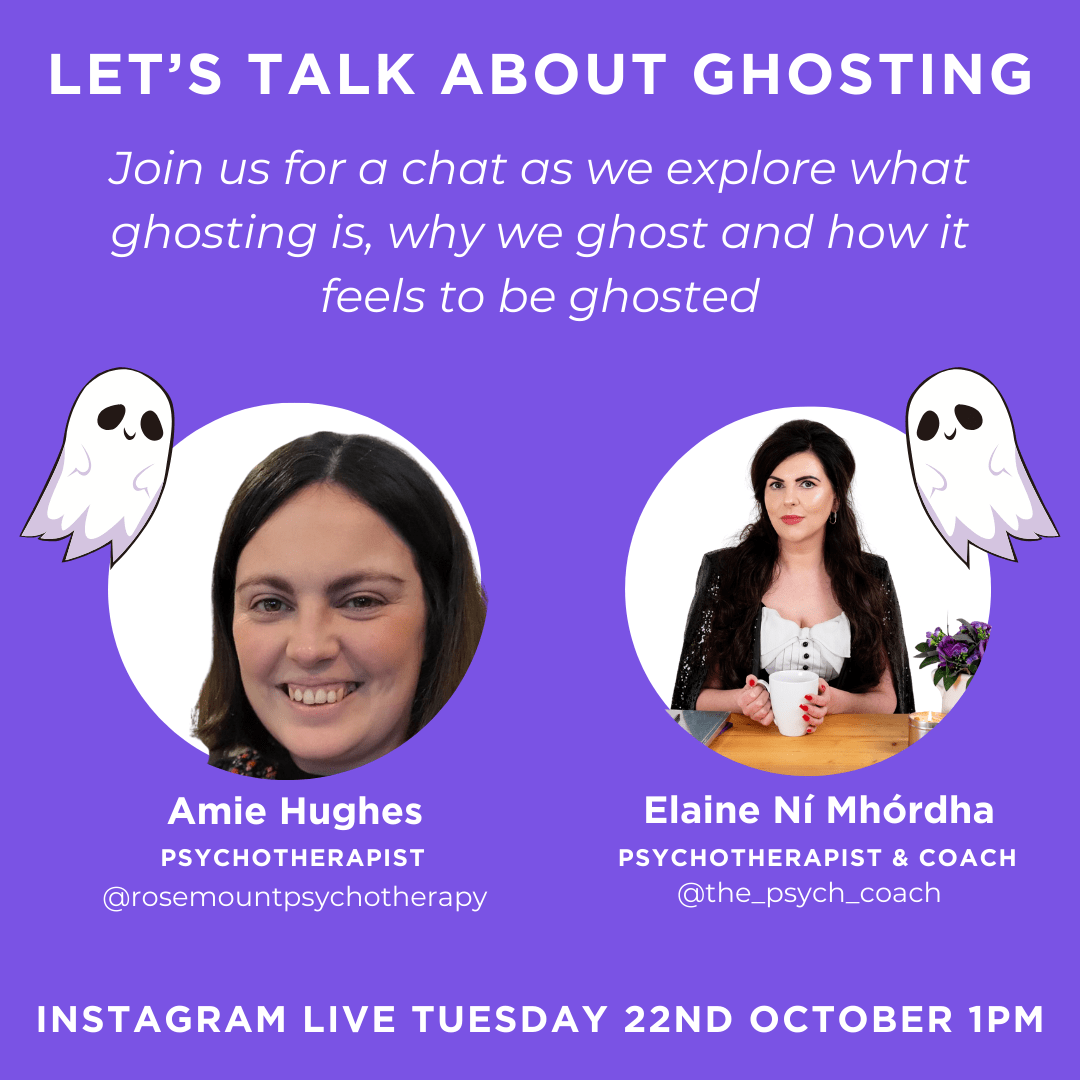
    As the chill of autumn settles in, my excitement for spooky ghosts peaks. However, unlike the playful spookiness of the season, ghosting behaviour is something I take seriously. Recently, I had the incredible opportunity to discuss this very topic with Amie Hughes from Rosemount Psychotherapy during an Instagram Live session.

    Ghosting is a phenomenon that, though often disregarded, can have a substantial emotional impact. During our conversation, we covered several key points, which I’d like to elaborate on here.

    What is Ghosting?

    Ghosting refers to the abrupt end of communication in a relationship, leaving the person who was ghosted without any explanation. This sudden silence can occur in any type of relationship, whether it’s romantic, platonic or professional. Ghosting does not refer to removing yourself from an abusive or toxic relationship for your own safety.

    How Does Ghosting Impact Us?

    For those on the receiving end, ghosting can be a profoundly painful experience. The sudden withdrawal of attention and communication can lead to feelings of confusion, self-doubt and rejection. It often leaves the ghosted person questioning their worth and wondering what they did wrong. Our mental and emotional well-being can suffer significantly as we struggle to make sense of the silence.

    Why Do We Ghost?

    Understanding the reasons behind ghosting can be complex. Often, the ghoster may be trying to avoid confrontations or uncomfortable conversations. They might feel overwhelmed or unsure about how to express their feelings, so they opt for the path of least resistance. In some cases, fear of hurting the other person’s feelings or dealing with their reactions can prompt someone to ghost rather than communicate openly.

    How to Cope with Being Ghosted

    If you’ve been ghosted, it’s crucial to recognise that the behaviour of the ghoster says more about them than it does about you. It’s not your fault, and you are deserving of love, respect and meaningful communication. Here are some ways to cope with being ghosted:

    1. Acknowledge Your Emotions: Give yourself permission to feel hurt, confused and even angry. These emotions are valid and part of the healing process.
    2. Seek Support: Talking to friends, family or a therapist can provide you with the emotional support you need. They can offer perspective and help you navigate your feelings.
    3. Focus on Self-Care: Engage in activities that bring you joy and relaxation. Prioritising self-care can help you regain your sense of self-worth and balance.
    4. Avoid Blaming Yourself: Remember, ghosting reflects the ghoster’s inability to communicate effectively, not your shortcomings.

    Moving Forward

    Amie and I concluded our discussion with a powerful takeaway: If you have been ghosted, it is not your fault. You deserve love and respect and you are not to blame for someone else’s inability to communicate.

    If you find yourself struggling with the aftermath of ghosting, whether as the ghosted individual or the ghoster looking to change their behaviour, I am here to support you. You can book your session with me here.

    For those who missed our insightful Instagram Live chat on ghosting, you can catch up on the conversation here.

    Remember, you don’t have to navigate this experience alone. Let’s work together towards healing and healthier communication.

    Ghosting | Your Therapy 2026


  • Navigating Adult Friendships – Breakups. From a Psychotherapist and Life Coach in Ireland

    Navigating Adult Friendships – Breakups. From a Psychotherapist and Life Coach in Ireland

    Adult friendships are vital parts of our lives, offering support, laughter and deep connections. However, just like romantic relationships, friendships can change or end. Our adult friendships are often cherished amidst the backdrop of family, career, and personal growth transitions. When a friendship breakup occurs, it can be a profound and emotional experience.

    As a Psychotherapist and Life Coach in Ireland, I understand the complexities of such transitions and hope to offer insights and guidance to help you navigate the challenges and emotions of friendship breakups.

    Understanding the Dynamics of Adult Friendships

    Adult friendships are unique. They often form during pivotal life moments—whether at university, through work, or shared interests. These bonds can feel as deep as family connections. As we grow, however, individual paths may diverge due to varying life priorities, interests, or geographical distances. Recognising these natural evolutions is crucial in understanding why some friendships change.

    Why Do Friendship Breakups Hurt?

    1. Emotional Investment: We invest significant emotional energy into our friendships, sharing intimate aspects of our lives
    2. Identity Ties: Friendships often play a role in defining our identity. Losing a friend can feel like losing a part of yourself
    3. Support Structures: Friends are trusted confidantes, and losing one can disrupt your support network, creating feelings of loneliness

    Tips for Navigating Friendship Breakups

    1. Acknowledge your Feelings: Allow yourself to grieve; it’s normal to feel sadness, anger, or confusion. Acknowledging these emotions is the first step toward healing
    2. Reflect on the Relationship: Consider what made the friendship valuable and what led to its end. This reflection can provide closure and insight into what you value in relationships
    3. Communicate Openly if Possible: If the situation allows, communicate openly with your friend to express feelings and seek understanding. This can provide closure and mutual respect for the shared history
    4. Seek Support: Lean on other supportive relationships—whether friends, family, or a therapist—to process your emotions and gain perspective
    5. Focus on Personal Growth: Use this transition as an opportunity for self-discovery. What have you learned about yourself? What do you seek in future friendships?
    6. Be Compassionate with Yourself: Remember that friendship breakups are a natural part of life and not a reflection of failure or inadequacy

    Embracing New Beginnings

    While a friendship breakup can be painful, it also opens the door for growth and new connections. It’s never too late to form new friendships or strengthen existing ones. Engage in activities you are passionate about, join groups or classes, and remain open to meeting new people who align with your current values and interests.

    By understanding your emotions and recognising the value of self-reflection, you can emerge from these experiences stronger and more aligned with your true self.

    If you find yourself struggling with the emotions surrounding a friendship breakup, know you’re not alone. I’m here to provide support and guidance as you navigate this transition.

    To keep up to date with all of my news and updates, be sure to follow me on Instagram.

    Navigating Adult Friendships | Your Support 2026